

When Men Choose, They Decide; When Women Choose, They Are Judged
August 25, 2025 | by priyanka Rathod
“The measure of any society is how it treats its women.” – Mahatma Gandhi
A 60-year-old man loses his wife. The very next day, without hesitation, he decides to remarry. Society nods in agreement. No one questions his age, his motives, or his morality. Instead, the choice is normalized—because it benefits the patriarchal mindset that safeguards the privileges of men.
Now imagine a 30-year-old widow in the same society. The moment she even thinks of remarriage, fingers are raised, whispers begin, and accusations of losing her character and morality are thrown at her. She is reminded of her “duty” to sacrifice, suffer, and live in the shadow of her late husband’s memory.
Why is this? Why do we accept change for men, but deny it for women?
The Gender Discrimination We Refuse to See
This is not just about marriage—it is about freedom of choice. In India, widows have historically been marginalized, shamed, and forced into lives of silence. Even today, in many parts of the country, widow remarriage is stigmatized. According to the National Family Health Survey (NFHS-5, 2019–21), only around 3% of widowed women remarry, whereas men face no such barrier.
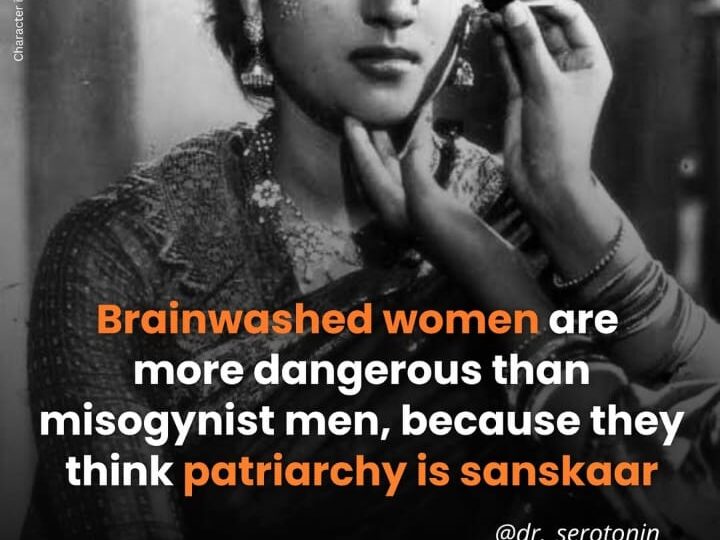
When a man takes a decision, other men rarely oppose it—because it aligns with their own potential benefits. If a 60-year-old man can remarry, that keeps the option open for every man. But when a woman chooses the same, the opposition often comes from other women first—mothers, mothers-in-law, relatives, neighbors—who begin questioning her morality.
“When women stand against women, patriarchy wins.”
The Role of Women Against Women
Society has conditioned women for centuries to guard patriarchal values—so much so that they often become enforcers of those very chains that bind them.
Instead of supporting another woman’s right to live freely, many women remind her of sacrifice, honor, and family respect. But what respect is there in denying someone happiness? What culture thrives on silencing half of its population?
“If women continue to police women, then who will liberate them?”
Learning from History, Acting in the Present
During India’s Renaissance period, reformers like Raja Ram Mohan Roy and Ishwar Chandra Vidyasagar stood up against cruel practices like Sati and fought for widow remarriage rights. They empathized with women when women themselves had little voice in society.
But the question is: until when will we depend on men to fight for us?
Why can’t women themselves decide what is right and wrong?
Education means the ability to question, to think beyond tradition, and to embrace change. If one is highly educated but still chained to narrow mentalities, are they truly educated?
Change Is the Law of Nature
A mountain was once soil, then rock, then towering stone. Change is the rule of nature, and society too must evolve. If women do not support women, gender equality will remain a distant dream.
“Empowered women empower women.”
If we unite, support each other’s choices, and break away from outdated norms, only then can we challenge patriarchy. Women must realize that their growth lies in solidarity, not in pulling each other down.
Conclusion: Stand Together, Rise Together
It is time we ask ourselves: Do we want to remain prisoners of societal judgment, or do we want to shape a society where women live with dignity, freedom, and choice?
The change will not come from outside. The change begins with us—when women stop being obstacles for other women, and start becoming their allies.
“When women support each other, incredible things happen.” – Unknown
✨ Final Note: Every time a woman is silenced, patriarchy strengthens its roots. But every time women stand together, the world moves one step closer to equality.
RELATED POSTS
View all


When Does a Revolution Begin? The Voice of the Middle Class
August 25, 2025 | by priyanka Rathod

Nanotechnology: The Tiny Science Shaping a Giant Future
September 3, 2025 | by priyanka Rathod

Digital Childhood: How Mobile Phones and Social Media Are Rewiring Young Minds
May 15, 2025 | by priyanka Rathod